

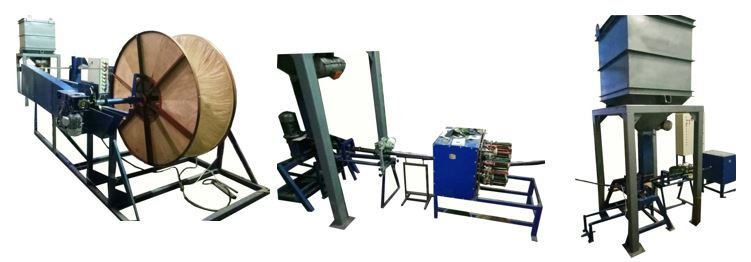
Anode grounding elements are designed for use as low-solubility components of extended surface-type anode groundbeds in cathodic corrosion protection systems for trunk pipelines and other underground metal structures.
Technical specifications:
Technical specifications of the line
- Throughput: 60 m/h
- Hopper capacity: 1.5 t
- Sleeve length: max. 200 m
- Outer diameter of the sleeve (diameter of the coke-filled sheath): 82 ± 1.5 mm (per technical specifications)
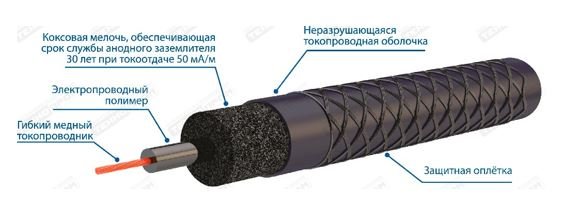
- Filling material: Coke
- Specific weight of the coke used for filling: 1300 kg/m³
- Coke (filler) packing density: Corresponds to the specific weight of the coke
- Coke particle size (fraction): 0.1–1.0 mm
- Coke moisture content: Matches ambient environmental conditions
- Conductor:
- 1. Copper, 10.0 mm² cross-section (3.6 mm diameter), in a sheath with a diameter of up to 36 mm;
- 2. Copper, 13.2 mm² cross-section (4.1 mm diameter), in a sheath with a diameter of up to 36 mm;
- 3. Copper, 16.0 mm² cross-section (4.5 mm diameter), in a sheath with a diameter of up to 36 mm;
- 4. Copper, 25.0 mm² cross-section (5.64 mm diameter), in a sheath with a diameter of up to 36 mm
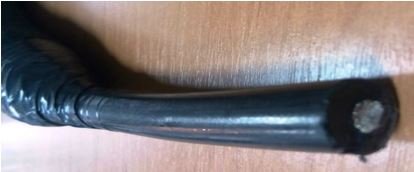
- Outer diameter of the conductor sheath: 36.0 ± 0.5 mm
- Conductor sheath material: Electrically conductive rubber
- Sleeve formation: From fabric/web material
- Fabric length per spool: 230 m
- Spool weight: Up to 10 kg
- Longitudinal seam: Stitched with an overlap
- Cable ends: Bonded/glued
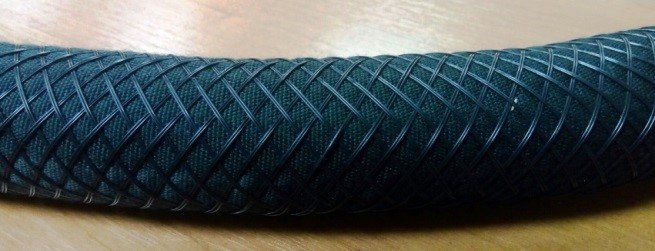
- Weight per 1 m of cable: 1.600–1.700 kg Braiding specifications: 48 strands, 2 yarns each (96 yarns total), yarn diameter 0.2–0.3 mm, braiding diameter 80±1.5 mm, braid angle 55–60° (48 bobbins)
24 strands, 2 yarns each (48 yarns total), yarn diameter 0.2–0.3 mm, braiding diameter 39±1.5 mm, braid angle 55–60° (24 bobbins) - Braid material: Polyester (PET) monofilament, 0.2–0.3 mm in diameter
- Cable orientation during braiding: Horizontal
- Bobbin weight: 0.1 kg
- Required braid yarn length (consumption): At least 500 m (with fully wound bobbins)
- Packing/filling formation: Vertical, via gravity (using a vibration device)
- Cable feed: Simultaneous with the feed of carbon material and the sleeve/sheath
- Sleeve (sheath) formation: Occurs in a vertical section
- Minimum bend radii:
- – For wires: R 100 mm
- – For cables without wrapping: R 150 mm
- – For cables with wrapping: R 150 mm
- Drive configuration:
- 1. Drive on the take-up reel
- 2. Pulling drive for the conductor (positioned after the straightening unit)
- Automated cable winding unit:
- Number of reels wound simultaneously: 1
- Power supply: 3-phase, 380 V
- AC frequency: 48–63 Hz
- Drive drum rotation speed: 30 rpm (smoothly)
- Cable length measurement accuracy, %: ±1
- Maximum weight of cable wound onto a drum, kg: ≤ 3000
- Electric cable pay-off unit:
- Number of drums (reels) that can be paid off simultaneously: 1
- Drum specifications
- Height – 1444 mm
- Width (across the length of the tie rods) – 770 mm
- Surface area – 1.11 sq. m
- Volume – 1.30 cu. m
- Weight of the drum (including sheathing) – 234 kg
- Weight of the drum – 186 kg
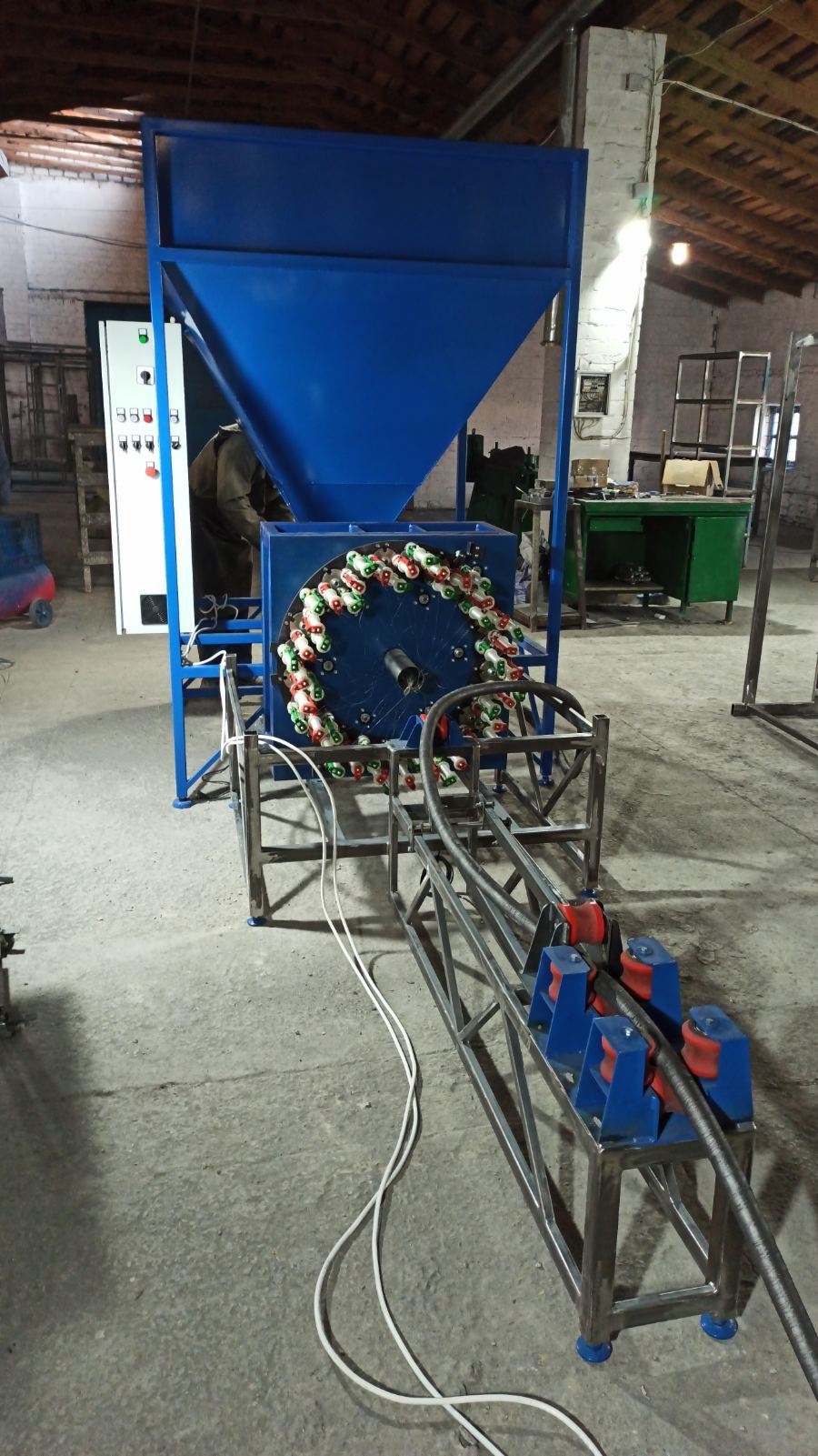
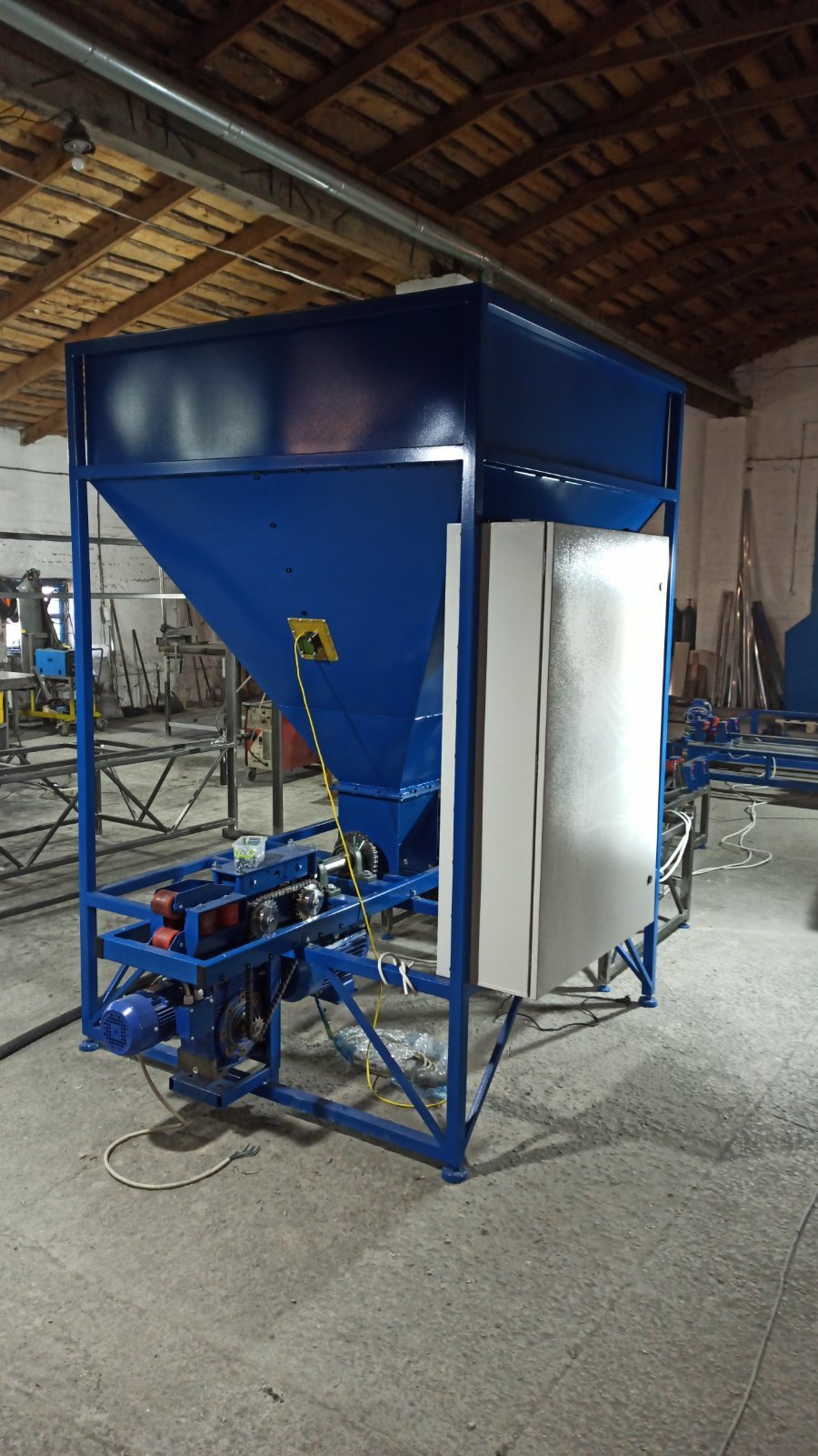
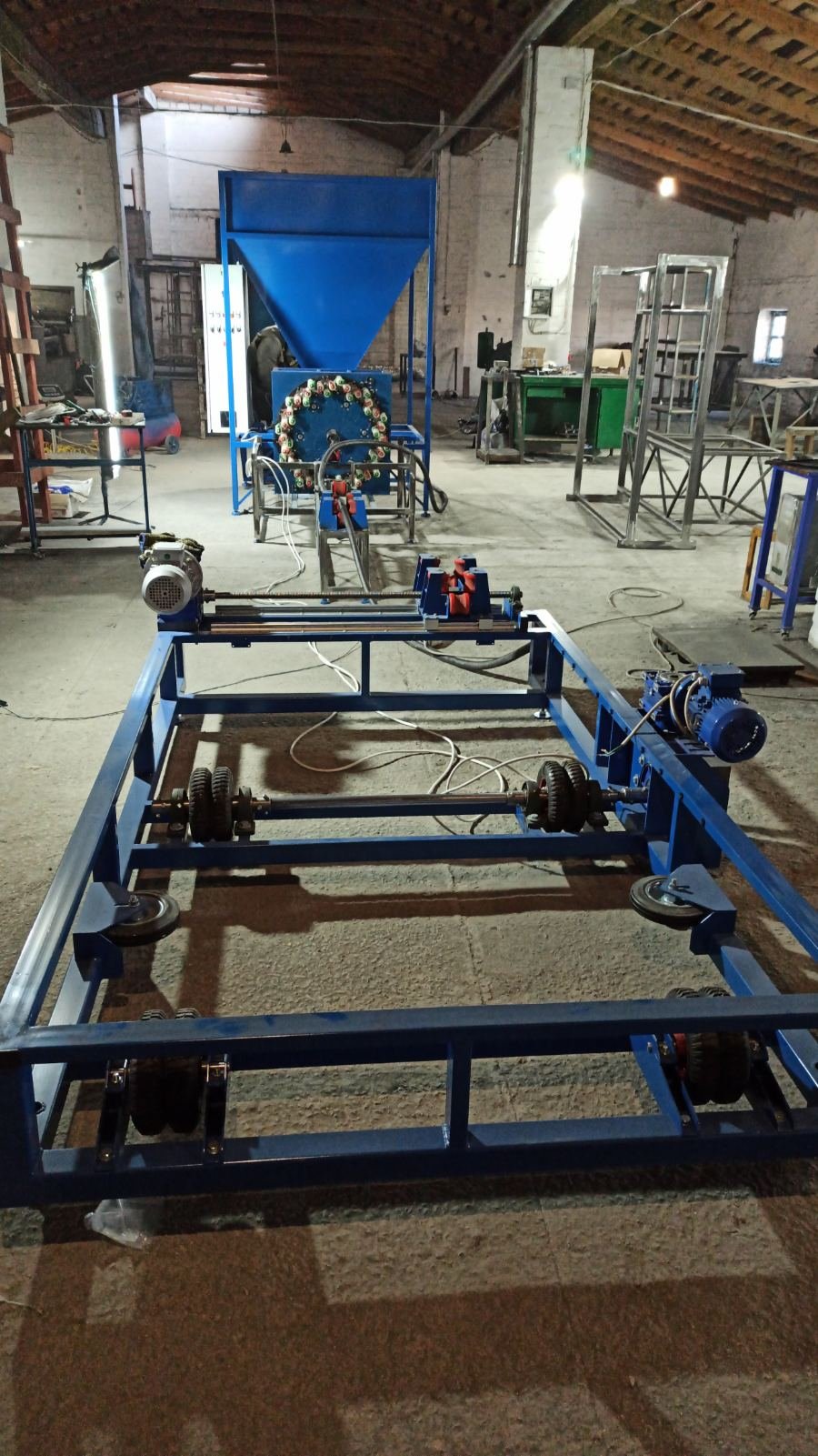
Line components:
- Electric cable pay-off unit
- Feeding mechanism
- Hopper
- Sewing machine
- Braiding machine
- Tensioning unit
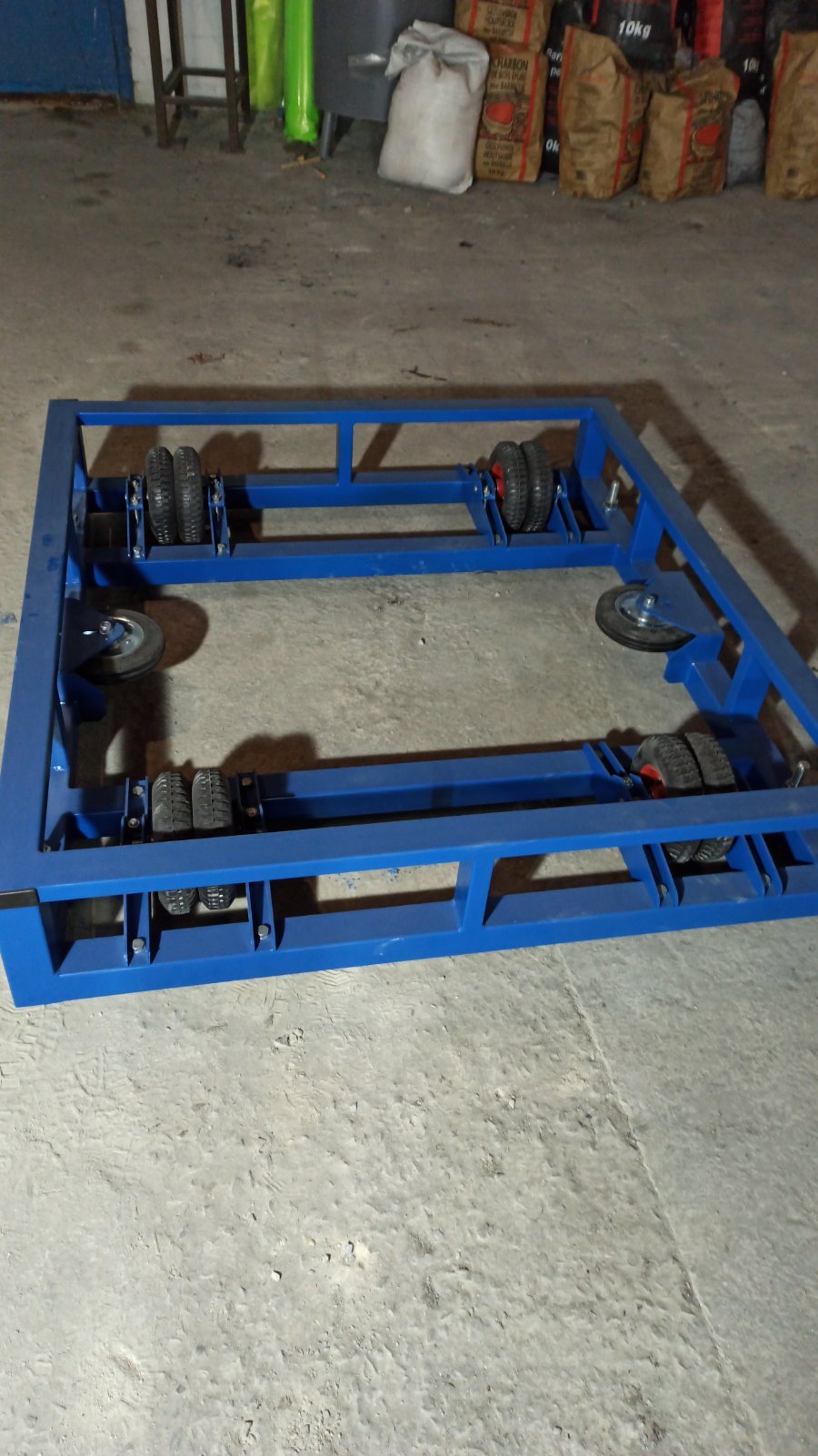
- Automated cable coiling/winding unit
Operating principle of the line:
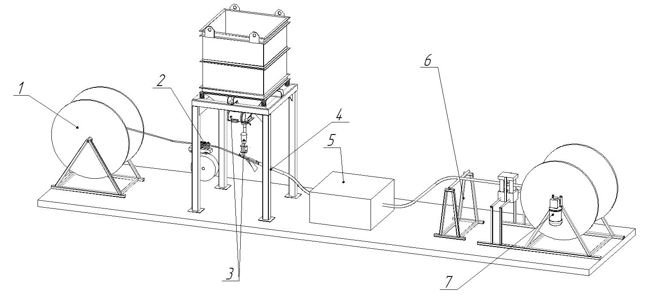
The operator places the cable drum onto the cable unwinding unit (1) and feeds the end of the cable into the pulling mechanism (2), which advances the cable toward the coke-feeding unit. Once the slide gate is opened, the operator activates the vibratory motor on the hopper (3) and the vibratory motor on the coke-feeding unit (3).
The pulling mechanism advances the cable through a sleeve-forming device; the sleeve is then filled with coke and sealed using a sewing machine (4). The sealed cable assembly is wrapped and fed into a braiding machine (5), which applies a thread braid to the sleeve, resulting in the finished product.
After exiting the braiding machine, the product passes through a tensioning mechanism (6) equipped with two limit switches that detect whether the cable is in a taut or slack state. Beyond this tension-sensing section, the finished product is wound onto a drum (spool) mounted on an automated cable-winding unit (7). The winding unit (7) activates when the cable reaches the lower (slack) position and deactivates when it reaches the taut position. Once deactivated, the winding unit will only restart when the cable again reaches the lower (slack) position.
After the cable has been threaded onto the drum of the winding unit (7), the production line enters a continuous operating mode, which persists until the braiding of the 200-meter cable segment is complete.
Scope of application for an anode grounding device:
Anode grounding electrodes are designed for use as low-dissolution components in extended surface-level anode grounding systems for cathodic corrosion protection of main pipelines and other underground metal structures.
The low-dissolution electrode is fabricated from a corrosion-resistant material featuring an electrochemically active metal-oxide coating. The electrode incorporates a distributed current-feed system along its entire length.
Additional information
12-month warranty
Post-warranty service